Updated October 20, 2026
Automatic Pool Cover Motor and Mechanism Replacement
Automatic pool cover motor replacement after a short thermal trip wastes the part and leaves the flooded housing that stopped the cover. Cover-Pools prints a submersion limit of longer than a few hours, and a clicking track-end pulley is a worn wheel rather than a failed motor.
Symptom checks stay on motor problems. This page is the replacement decision: motor, track-end pulley, drain, or none of those. The repair hub is automatic pool cover repair.
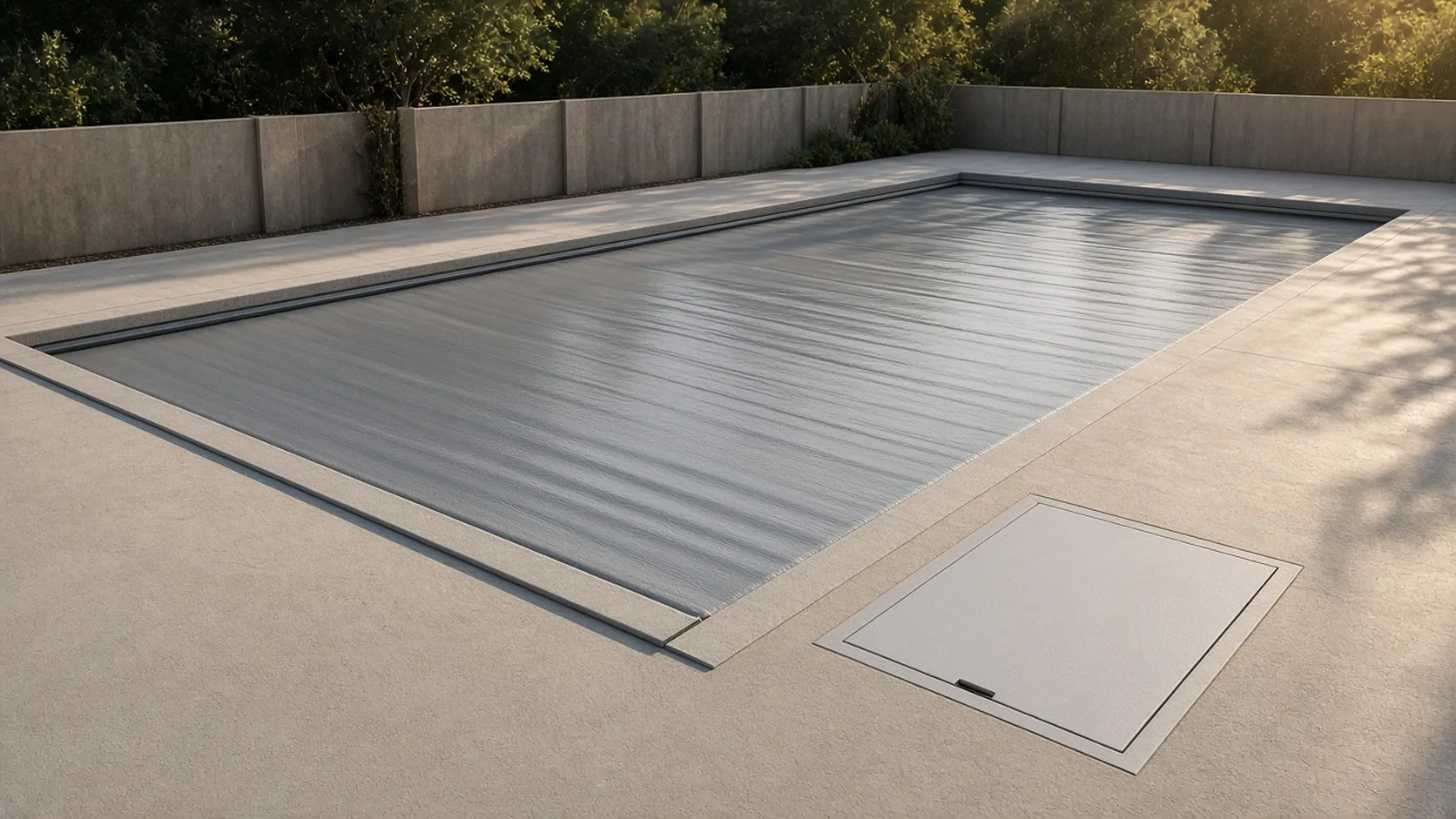
Printed limits that decide the part
Cover-Pools T4 owners manual 800210 REL-0003, printed page 10, Motor, says the motor is waterproof and capable of withstanding short-term submersion. It then says not to allow the motor to be submerged for periods longer than a few hours. Below-deck or recessed housings need adequate drainage, and all drains stay clear. The motor has an internal thermal overload switch. If the motor overheats to the point where the switch activates, it resets automatically when cool.
Save-T 3 owners manual 800061 (2011), printed page 10, repeats that motor paragraph.
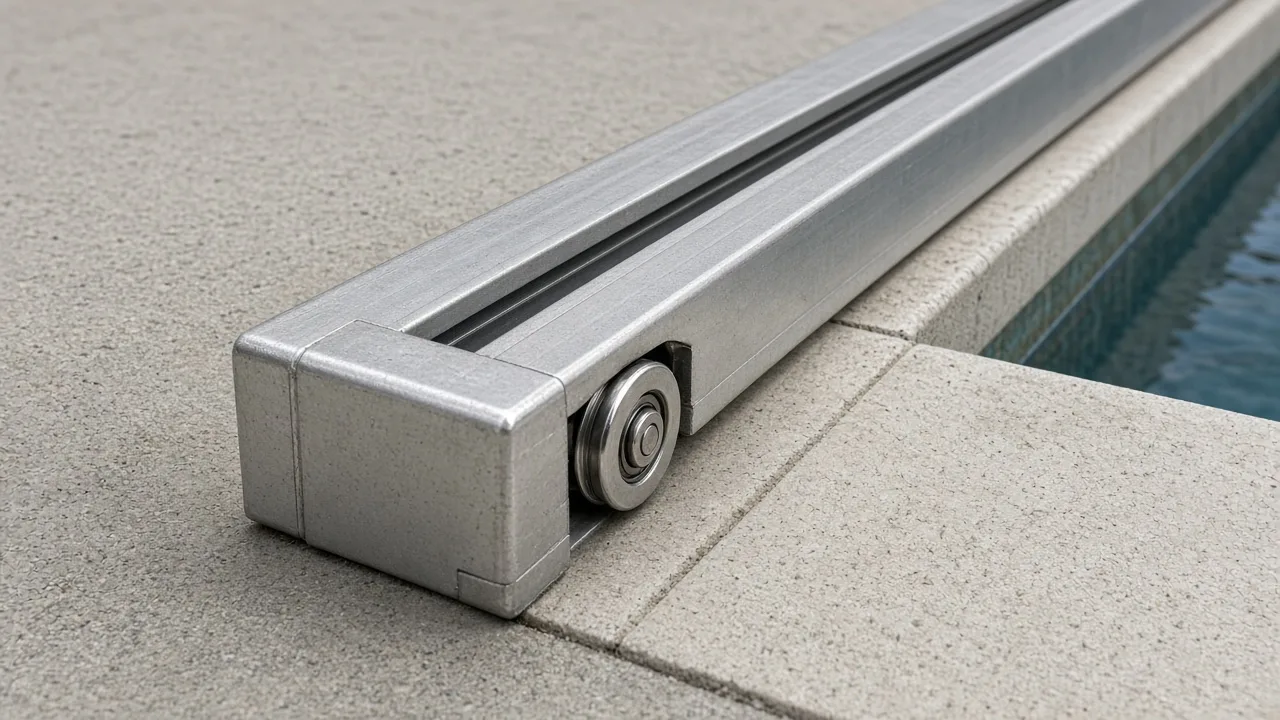
The same T4 page, under Replacing a Pulley, and the same Save-T 3 page, say a pulley sits at the end of each track. A worn pulley can cause cover adjustment problems and eventually lead to a broken cable or rope. Pulleys usually last about three years. A noticeable clicking or grinding sound from that pulley means it is worn. The remedy named there is replacement through the local dealer.
| Printed item | Where it is printed | Limit | What it decides |
|---|---|---|---|
| Motor submersion | T4 and Save-T 3, printed page 10 | Short-term only. Not longer than a few hours. | Clear the drain before a motor order |
| Thermal overload switch | Same motor paragraph | Resets automatically when cool | A stop that clears after cooling is the switch |
| Track-end pulley | T4 and Save-T 3, Replacing a Pulley | Usually about three years. Click or grind means worn | Pulley replacement, on the way to a broken rope |
| Motor lubrication | T4 lubrication table, row D, printed page 11. Save-T 3 lubrication table says the same | Does not require lubrication | Oil is not a motor service step |
| Water on the cover | T4 winterizing, printed page 12. Save-T 3 winterizing uses the same weights | 8 lb per gallon. A few inches of rain can make a ton of water | Pump the sheet. Do not treat the weight as a motor fault |
| Housing drain and lid | T4 drainage, printed page 12 | Drain free of debris. Lid kept in place | Rain and foot traffic stay out of the pit |
| Amp limiter | T4 printed page 14 | Stops the motor when amperage rises from an obstacle, water, track dirt, or damage | Fix the load. The printed next step is an amp-limiter adjustment by a cover technician |
Dominant failure mode
| Condition | Part the manual names | Dominant failure mode | Prevention |
|---|---|---|---|
| Water held in a below-deck housing | Drain and lid | Standing water past the few-hour submersion limit | Keep the drain clear and the lid on |
| Motor stops, then runs after it cools | Internal thermal overload switch | Overheating until the switch activates | Find the jam, the low pool, or the standing water before ordering a motor |
| Click or grind at the end of the track | Pulley | Worn pulley on the way to a broken cable or rope | Replace the pulley. The usual life printed is about three years |
| Cover run over a low or empty pool | Water level | Friction, and a cover that will not support itself | Hold the water at normal operating level. Printed page 10 warns of severe damage |
| Cover stops mid-travel with little water on the sheet | Auto-shutoff amp limiter, printed page 14 | Extra amperage from an obstacle or dirty tracks | Remove the load. Amp-limiter adjustment is a technician step, not a motor swap |
| Hand pull after a stall | Coupler 080027 or the motor side of the slip clutch | The bolt was removed so the rope can be pulled by hand | That drawing is emergency travel. It is not a motor replacement |
Rules of thumb
The printed threshold is submersion longer than a few hours. A direct spray at low force, and a wet floor under a motor that stayed above the water, are still inside the short-term allowance on printed page 10.
A stop that clears after the motor cools is the thermal overload switch. Replacing the motor does not clear a blocked drain.
A click or grind at the track-end pulley is a pulley. Both manuals print a usual life of about three years and name a broken cable or rope as the result of leaving a worn pulley in place.
The motor row in the lubrication table says the motor does not require lubrication. Grease belongs on the motor-side end hub and the double dog, on the schedule printed beside those rows.
A mid-travel stop with a nearly dry sheet is the amp limiter sensing load. Printed page 14 lists water, dirt in the tracks, an obstacle, or damage. The clutch page is slip clutch torque. Shear pins are brass shear pins.
Water on the cover
The winterizing section gives the weight directly. Each gallon of water on the cover weighs eight pounds, and a few inches of rain can quickly result in a ton of water.
Gallons = weight_lb / 8
Worked example: a short ton is 2,000 pounds. 2000 / 8 = 250 gallons. That is the volume the eight-pounds-per-gallon line assigns to a ton of water. The manuals do not print a pool area, so 250 gallons is not converted into inches of rain on this page.
Without water under the cover, the same paragraph warns of tracks pulling off, a torn cover, or other damage to the pool. Make at least monthly inspections of the water level under the pool cover. Water already on the fabric is a pump job, covered in the pool cover pump guide.
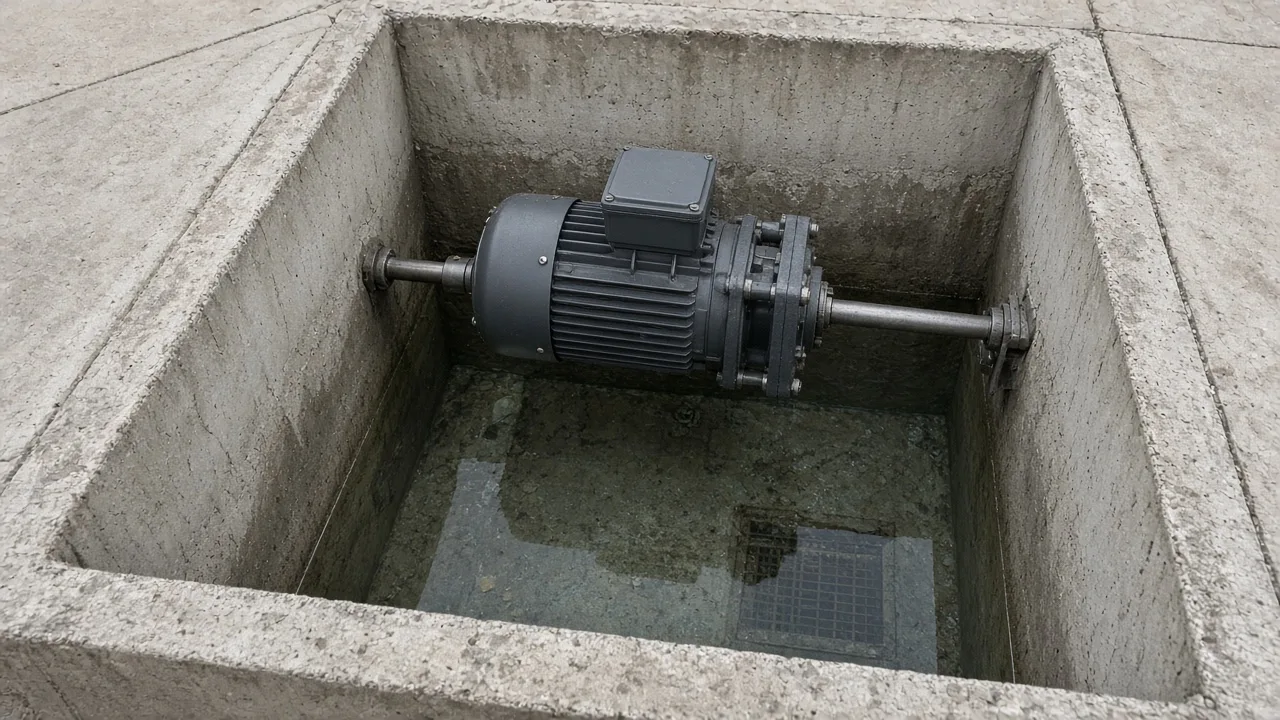
What the housing section shows
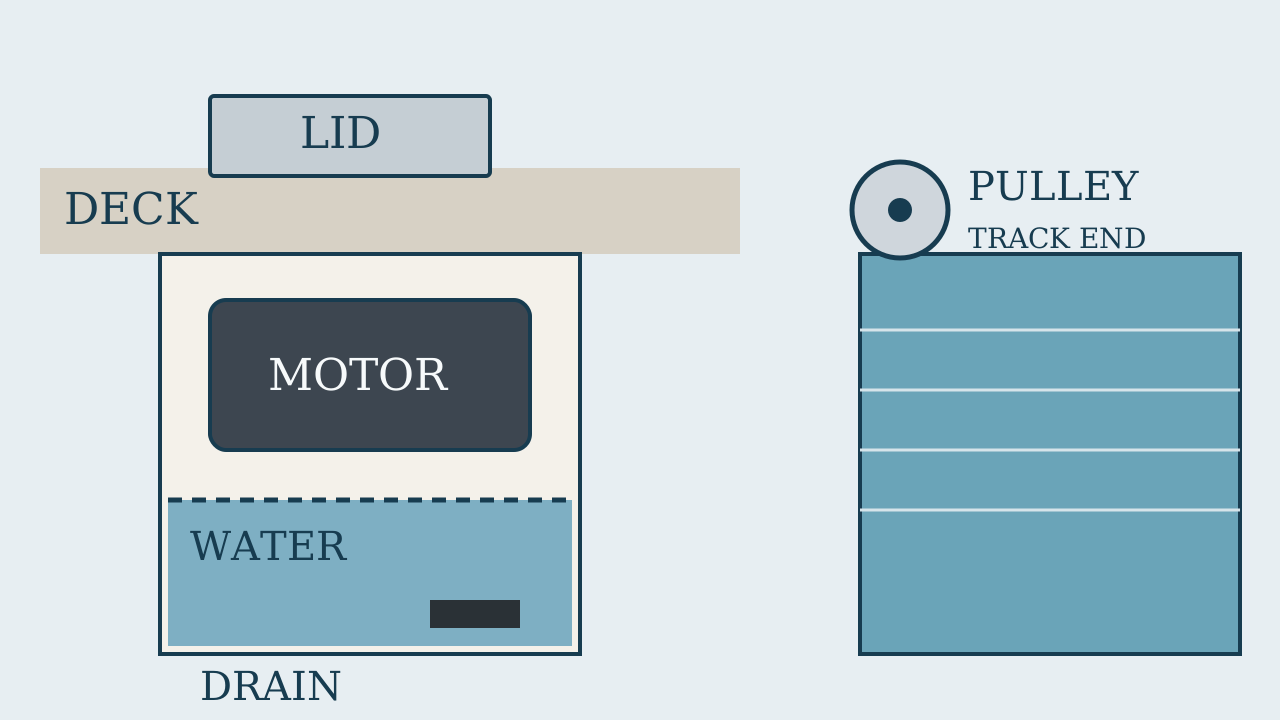
Mechanism cleaning on printed page 10 is fresh water only, with all electricity to the cover turned off first, and with adequate drainage in the housing. The motor will withstand direct spray at low force. The lubrication table's note about high-pressure water sits under parts that receive grease. It is not a motor wash.
Running the cover over a low or empty pool is a water-level fault. Printed page 10 says the cover will not support itself in many of those cases, that low water increases friction, and that severe damage follows when the water level is not held.
What Remove Motor Side means
T4 printed page 15, emergency procedures, labels the hand-operation drawing Remove Motor Side. The bolt comes out of coupler 080027 or out of the motor side of the slip clutch. Two people then pull the cover by hand. The manual says closing by hand needs two strong people, and it says not to pull directly on the cable or rope. This page does not repeat that pull sequence.
The drawing disconnects the reel from the motor so the rope can be pulled. It does not describe lifting the motor out of the housing. It does not print a wire, a horsepower, or a calendar life for the motor. Those figures are absent from the motor, pulley, and emergency sections used here, so they are not supplied on this page.
Which part to replace
Replace the drain path when the pit holds water. The lid stays on so rain does not enter and so a person does not step into the housing.
Replace the track-end pulley when it clicks or grinds. The usual life printed is about three years. A worn pulley leads to a broken cable or rope. The parts photograph list is automatic pool cover parts.
Leave the motor installed when it only stopped on the thermal switch and restarted after cooling, and when any submersion was shorter than a few hours. Leave it installed when the amp limiter stopped a loaded cover and the load is the thing that changed.
A motor that does not reset after it cools, or that stayed under water longer than a few hours, is the case those two sentences on printed page 10 were written for. Neither manual prints horsepower, a motor part number, or a replacement interval for the motor in the sections cited here.
Inspect the cover components at least two to three times a year. That cadence is printed on T4 page 15, under inspection for wear. It is an inspection interval, not a motor life.
Frequently asked questions
Is a waterproof pool-cover motor allowed to sit in the housing water?
T4 800210 REL-0003 and Save-T 3 800061 (2011), both on printed page 10, say the motor withstands short-term submersion and should not stay submerged longer than a few hours. Below-deck housings need a drain that stays clear.
The motor stopped and later ran again. Is that a failed motor?
Printed page 10 says the internal thermal overload switch resets automatically when cool after the motor overheats to the point where the switch activates. A restart after cooling is that switch. It is not, by itself, a motor replacement.
What does a click at the end of the track mean?
Both manuals say a pulley sits at the end of each track, pulleys usually last about three years, and a noticeable click or grind means the pulley is worn. The next failure they name is a broken cable or rope.
Does Remove Motor Side mean pull the motor out of the housing?
On T4 printed page 15 the label sits on the emergency hand-operation drawing. The bolt comes out of coupler 080027 or out of the motor side of the slip clutch so two people can pull the cover by hand. The motor stays in the housing.
How much does water on the cover weigh?
Each gallon weighs eight pounds. Gallons = weight_lb / 8. A ton, 2,000 pounds, is 2000 / 8 = 250 gallons. The manuals do not print a pool area, so this page does not turn 250 gallons into inches of rain.
The cover stops mid-travel and the sheet is almost dry. Is the motor finished?
Printed page 14 says the auto-shutoff amp limiter stops the motor when it senses extra amperage from an obstacle, water, dirt in the tracks, or damage. With little or no water on the cover, the printed next step is an amp-limiter adjustment by a cover technician, after the load is fixed.
Sources and method
Both manuals were fetched on 20 October 2026. This page does not inspect an installed mechanism. The motor, pulley, and emergency sections cited here do not print horsepower, a motor part number, or a motor replacement interval, so those figures are not added.
- Cover-Pools T4 Owner's Manual, 800210 REL-0003, ©2020. Printed pages 10, 11, 12, 14, and 15.
- Cover-Pools Save-T 3 Owner's Manual, 800061 REL-0012, ©2011. Motor and track-end pulley on printed page 10. Motor lubrication on printed page 11. Water weight and housing drain on printed page 12.
The photographs are generic: a deck lid, a motor held above standing water, and a wheel at the end of a track. They are not Cover-Pools nameplates.