更新 2026年8月
Hydraulic Automatic Pool Covers
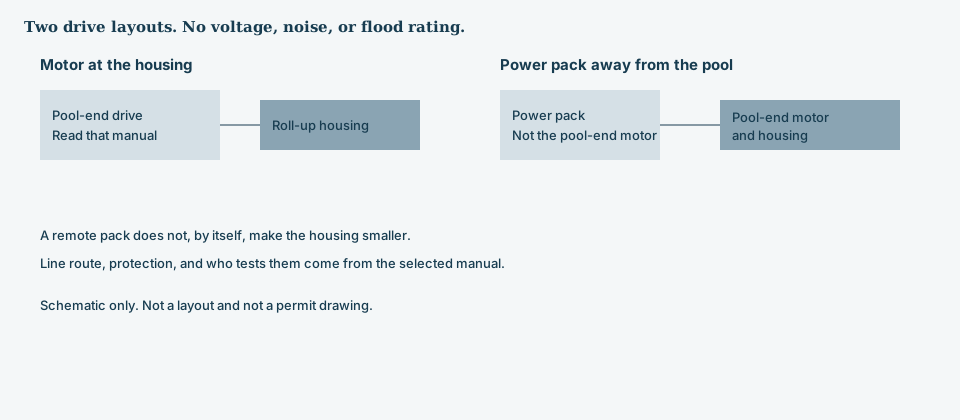
A hydraulic automatic pool cover uses fluid power to move the roller instead of an electric motor at the pool end. Builders choose it when they want the drive away from the water, quieter travel, or a cleaner housing. The tradeoff is extra provision for the power pack, lines, and service access.
Why hydraulic is its own category
Hydraulic drive changes the equipment room, the housing, and the service plan. It is not a footnote on a generic automatic-cover page. Specifiers need line routing, pack location, and electrical feed for the pack, not only fabric width.
What the project must provide
Typical provisions include a ventilated location for the power pack, lined routes that are not crushed by concrete, and a disconnect for the pack circuit. A licensed electrician handles the power side. Cover technicians handle the hydraulic circuit after the shell and deck are ready.
| Item | Owner check | Professional scope |
|---|---|---|
| Power pack location | Confirm a dry, reachable room exists | Mount, fill, and commission the pack |
| Hydraulic lines | Do not bury unmarked lines | Route, protect, and pressure-test |
| Electrical feed | Find the disconnect | Size and connect the circuit |
| Controls | Keep keys away from children | Set limits and test travel |
When hydraulic is a weak fit
Very tight equipment rooms, long unsupported line runs, and projects with no path for later service make hydraulic harder. Electric drive can be simpler when the housing already has dry motor space and a nearby disconnect.
How hydraulic travel actually works
The power pack sits in a dry room and sends fluid through protected lines to a drive at the housing. The roller still turns. The leading edge still has to stay square in the tracks. Hydraulic changes where the energy lives, not the geometry of travel.
If travel is already violent, treat it as a repair call. Do not open a pressurized pack. The design page is hydraulic system design.
What to put on a hydraulic RFQ
A complete hydraulic quote names pack location, line route, sleeve or conduit through concrete, electrical feed to the pack, and who commissions limits. A fabric width without those lines is not a hydraulic bid.
| Ask in writing | Why it matters | Red flag |
|---|---|---|
| Pack room and ventilation | Heat and service space | "We will find a spot later" |
| Line path and protection | Crushed lines fail after the deck is poured | Unmarked bury in the slab |
| Who owns the pack circuit | Cover tech and electrician split | No disconnect shown |
| Commissioning visit | Limits and leak check | Ship-only equipment price |
What to read with this page
Use the parent hub for the product family, then stay inside this cluster for the decision you still have open. The related cards below are the three pages that usually settle the next question without sending you back to a generic search.
If travel is already unsafe, leave the guide and open repair. If you are still planning a system, work through the planning checklist and bring the answers to the people who will measure and install it.
常见问题
- Is hydraulic safer than electric?
- Safety comes from the installed cover system and how people use it, not from the drive fluid. Hydraulic mainly moves the motor risk away from the pool end.
- Can I convert an electric cover to hydraulic later?
- Sometimes, if the housing, roller, and tracks were built for it. Treat conversion as a new design review, not a parts swap.
- Is hydraulic always quieter?
- The motor noise moves off the pool end. The pack still makes sound in the equipment room. Ask where that room sits relative to living space.
- Who services a hydraulic leak?
- A cover technician who works that system. A general pool tech or an electrician should not open the circuit. Stop travel if you see fluid at the housing or pack.
上级栏目: Automatic Pool Covers