更新 2026年8月
Automatic Pool Covers
An automatic pool cover is a fabric or slat system that travels on tracks to open and close the water. Owners use it for safety, debris control, heat retention, and daily convenience. This page is the site hub for system types, track options, new-build versus retrofit work, and the questions that belong in a specification.
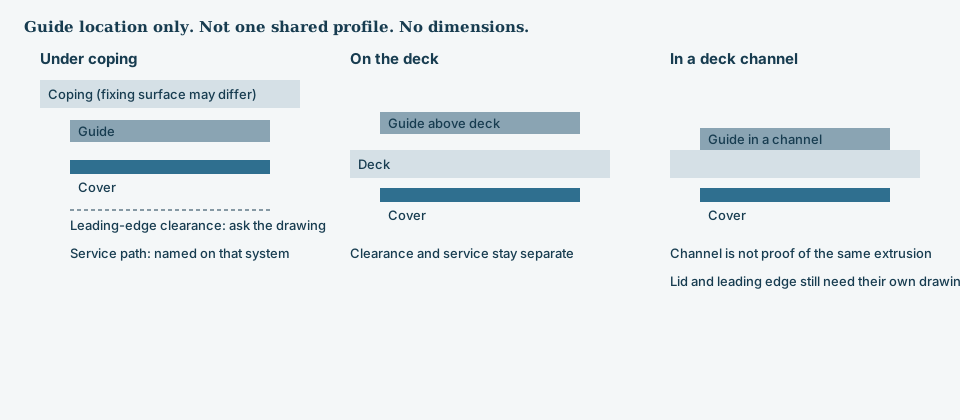
What is an automatic pool cover?
An automatic cover is a retractable barrier that stores in a housing at one end of the pool and travels along guides on the long sides. A key switch or similar control runs the drive. When closed, the fabric spans the water. When open, the pool is clear for swimming.
The phrase covers electric, hydraulic, motorized, and retractable systems. Those are the same buying job, not separate page topics. Start with how automatic pool covers work if you need the travel sequence before you pick a drive.
Owners who will open the water most swim days usually stay on this product family. Owners who only close for winter should compare a manual safety cover before they pay for tracks and a box.
How the system works
A drive turns a roller or pulls webbing so the leading edge moves down the tracks. Gliders keep the fabric in the guides. Limit settings stop travel at each end. Water level, track cleanliness, and square geometry decide whether the cover runs true.
If travel is already failing, do not stay on this hub. Use the repair symptom pages. If the pool is still on paper, lock track systems and installation before anyone cuts fabric.
Main system types
Most project specs choose a drive first, then a track, then a housing. Hydraulic systems use fluid power and sit farther from the water. Electric systems put a motor near the roller. Fabric track systems are the common US automatic safety-cover form. Slatted systems are a different product family.
Compare hydraulic versus electric as a complete scope, not a motor sticker. Compare undertrack versus top track as a coping decision, not a finish preference.
| Type | Best when | Watch for |
|---|---|---|
| Hydraulic fabric | Quiet travel, motor kept off the pool end | Hydraulic provision in the equipment area |
| Electric fabric | Simple power at the housing | Motor access, moisture, and electrical disconnect |
| Top track | Existing decks or later retrofit | Visible guides and coping detailing |
| Undertrack | New builds that hide the guide | Coping design and service access |
New pool versus existing pool
New construction can hide tracks, size the housing, and place drainage before coping is set. An existing pool must work with the deck, bond beam, and equipment already in place. That is a different decision, not a shorter version of the same page.
Read covers for new construction or covers for an existing pool next. Freeform, vanishing-edge, and spa combos have their own shape pages from this hub.
Safety and standards
A cover may be called a safety cover only when it meets the performance and labeling rules that apply, commonly discussed under ASTM F1346. A solar blanket or untested debris cover is not a safety cover. Load ratings are not an invitation to walk, sit, or play on the fabric.
Verify the claim on the ASTM F1346 page. If someone treats the sheet as a deck, send them to can you walk on an automatic pool cover.
Which shape pages to open next
A straight leading edge needs two track walls and a housing end. If the waterline is a kidney, a beach, a raised vanishing wall, or a spa that sits in the travel path, stop guessing from a brochure photo.
- Freeform pools if the outline curves
- Infinity and vanishing-edge if a wall drops away
- Pool and spa if two bodies share a deck
- Fiberglass, gunite, or vinyl liner for the shell interface
- Custom pools when the architecture is the exception
Main components you should be able to name
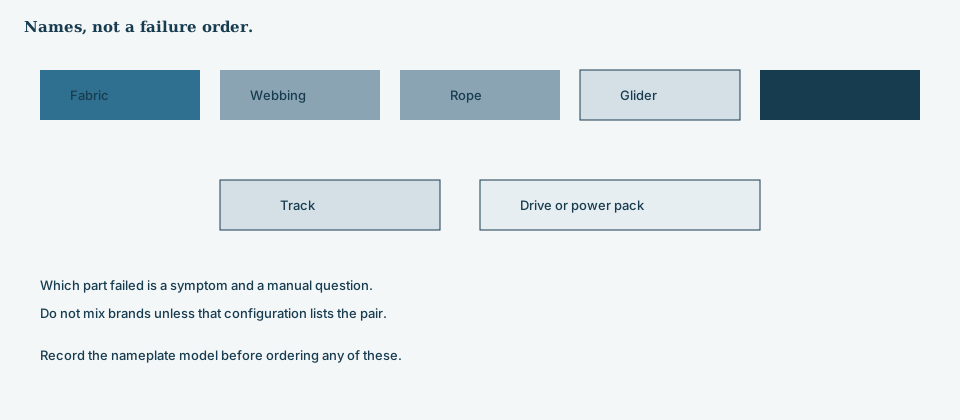
A useful spec names the drive, the track, the leading edge, the fabric or slat sheet, the housing and lid, the drain, and the control. If a quote only says "automatic cover," it is missing the parts that decide service and price.
The parts hub and the parts diagram use the same words. Use them when you photograph a problem or write an RFQ.
| Component | What to lock | If you skip it |
|---|---|---|
| Drive | Hydraulic or electric, pack or motor location | Housing and service access get guessed |
| Tracks | Undertrack, top track, or recessed | Coping and retrofit cost appear late |
| Housing and lid | Length, depth, lid finish, drain | The box floods or the lid rocks |
| Control | Key switch location and who holds keys | Unattended travel and child access |
Cost, life, and what a quote must split
Price moves with waterline size, track labor, drive provision, housing work, and whether the deck already exists. Fabric is one line. Site work is usually the larger surprise.
Read cost drivers before you compare two numbers. Ask how long they last as fabric, webbing, and drive separately. Are they worth it is a use test, not a sticker test.
Questions to send a supplier before deposit
Ask for the track type in writing, the housing size, who owns electrical or hydraulic provision, how out-of-square water is handled, and which document proves a safety-cover claim. Deposit should wait until those answers sit on one page.
- Track, lid, and drain specified, not implied
- Commissioning and owner briefing included
- Warranty documents readable before money moves
- A written plan if the shell is not square
What to send before you ask for a system read
A photo of both long sides, both ends, and the equipment area is enough to start. Add waterline length on each side if you can walk the deck. Use the measurement worksheet so the numbers mean the same thing to a technician.
If the project is still in drawings, send the sheet that shows the housing end and the coping detail. The builder hub lists what belongs on that sheet.
常见问题
- Is an automatic cover the same as a safety cover?
- Only if the installed product meets the safety-cover standard and is used as specified. Automatic describes the mechanism. Safety describes tested performance.
- Can every pool take an automatic cover?
- Rectangular and near-rectangular pools are the straightforward cases. Freeform, vanishing-edge, and raised-wall pools need a shape and track review before anyone orders fabric.
- What should I decide first: brand, drive, or track?
- Decide the job (daily open versus seasonal close), then the construction stage (new deck versus finished deck), then drive and track. Brand is a later comparison on the same scope.
- Can I walk on an automatic pool cover?
- A load rating is a test condition, not a walkway. Do not treat the fabric as a deck. See can you walk on an automatic pool cover.