更新 2026年10月
Pool Safety Covers
A pool safety cover is a barrier that meets a published performance and labeling standard. In the United States that document is ASTM F1346. This site did not retrieve the current designation year on 2026-10-11, so it does not restate clauses. Mesh, solid, winter, and some automatic systems can qualify only when the installed kit matches a tested configuration. Solar blankets and untested debris covers do not. This hub separates those products so a buyer can verify a claim instead of trusting a label.
What the word safety is allowed to mean
Safety cover is a defined product class, not a marketing adjective. The installed cover, anchors, and hardware have to match the tested configuration. A photo of people standing on a cover is not proof, and it is not advice to walk on yours.
Cover families
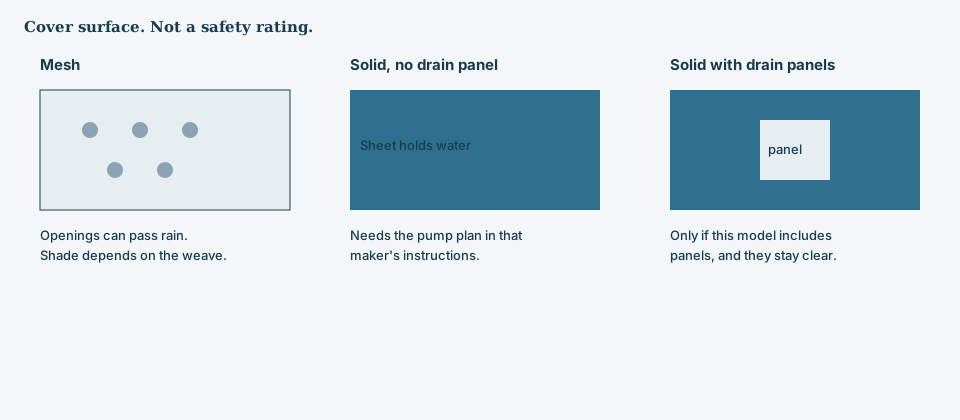
Mesh drains rain and hides less of the water. Solid sheds water and needs a pump plan. Winter covers are often seasonal and manually installed. Automatic covers add tracks and a drive. Each family answers a different ownership job.
Open mesh safety covers, solid safety covers, or winter covers for the product that matches the idle months. Use mesh vs solid when the only leftover question is drainage versus darkness.
Daily open versus seasonal close
If you will uncover the water most swim days, an automatic safety cover is the product that people actually put back on. If the pool sits closed for months, mesh or solid on anchors is usually the honest barrier.
Do not stack the words. Winter is a season. Safety is a tested install. Automatic is a mechanism. Ask for the evidence on the ASTM F1346 checklist before you accept any of those labels.
| Family | Daily use | Typical job |
|---|---|---|
| Automatic fabric | Daily open and close | Year-round barrier only if that system is tested |
| Mesh safety | Seasonal or long idle periods | Drain rain, block debris |
| Solid safety | Seasonal | Block light and debris, manage standing water |
| Solar blanket | Swim-season heat | Not a safety cover |
How to verify a safety-cover claim
Ask for the tested configuration: fabric or mesh model, anchor spacing, hardware, and the labeling that ships with that kit. A logo on a brochure is not that packet. Installation that changes spacing or substitutes hardware can void the claim even if the sheet is the right SKU.
Work the ASTM F1346 checklist. If someone points at people standing on a cover, send them to can you walk on an automatic pool cover. Load rating is not permission.
- Model and test evidence for the exact cover, not a sister SKU
- Anchor and hardware list that matches the test
- Who installs and who inspects after the first season
- A written "do not walk" brief for household users
Automatic, mesh, and solid on one pool
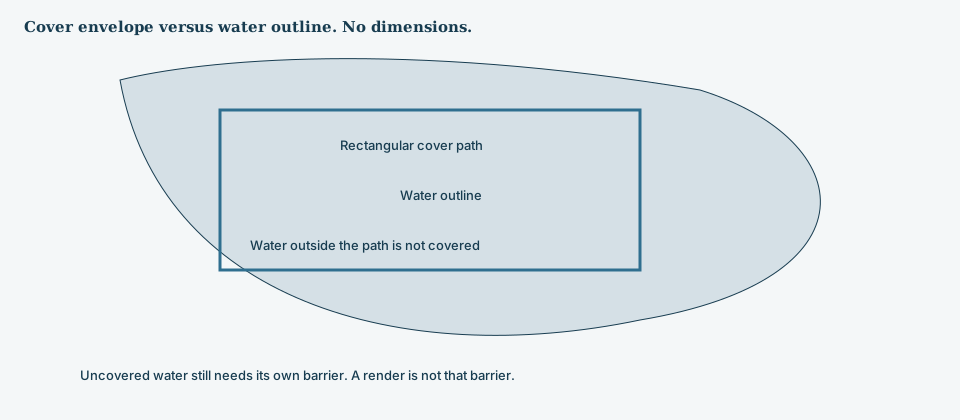
Some owners want an automatic cover for swim season and a mesh or solid cover for a long idle winter. That is two products and two installs unless the manufacturer documents a dual-use plan. Do not assume a taut automatic sheet is a winter snow cover.
Read automatic covers in winter before you buy a second sheet. Ice and travel are stop conditions on rain and snow load.
Load, water, and walking
A rating is a test condition. It is not a walkway. Read can you walk on an automatic pool cover and rain and snow load before you treat any sheet as a deck.
Solid covers and many automatic fabrics need a cover pump. Mesh tries to drain. None of those jobs replace a closed, tested install.
常见问题
- Does ASTM F1346 certify a brand?
- The standard sets performance and labeling tests. Buyers should ask for the test evidence that applies to the exact model and installation, not a generic badge.
- Is a solar blanket a safety cover?
- No. A solar blanket is a heat sheet. It is not a tested barrier and it should not be sold or used as one.
- Do I need a pump with a safety cover?
- Solid covers and many automatic fabrics need a pump plan. Mesh is meant to drain. See the cover pump page before you treat standing water as normal.
- Can I walk on a mesh or solid safety cover?
- A test rating is not an invitation. Keep people off the sheet. Rescue access and labeled load are not the same as a walkway.