更新 2026年8月
How Automatic Pool Covers Work
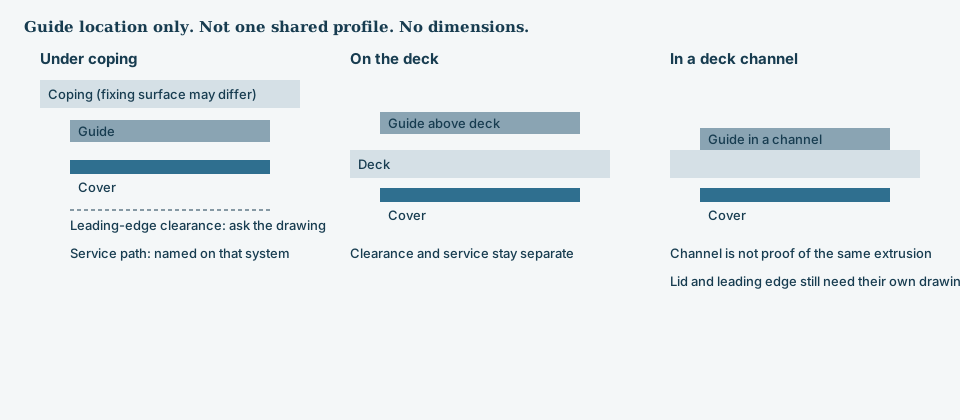
An automatic pool cover works by driving a roller or webbing system so a leading edge travels along tracks on the long sides of the pool. Gliders keep the fabric in those guides. Limit settings stop travel at each end. Water level, square geometry, and clean tracks decide whether the cover runs true. This page explains the mechanism, not the sales pitch.
What actually moves
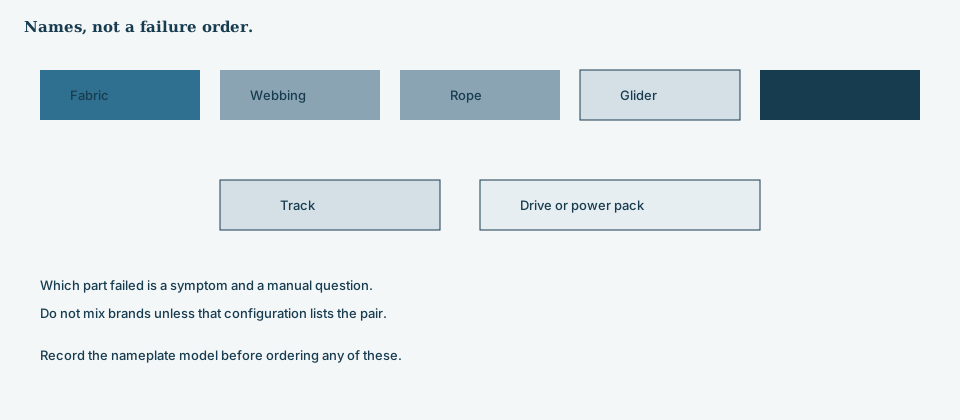
The fabric or slat sheet is the visible barrier. The work happens at the ends and edges. A drive turns the roller or pulls webbing. The leading edge is the stiff bar that stays square as the cover opens and closes. Side gliders ride in the tracks so the fabric cannot walk off the water.
When the system is commissioned, travel stops are set so the leading edge does not slam the housing or overrun the far wall. Those stops are mechanical or electronic limits, not a guess at the key switch.
Drive, tracks, and fabric
Electric systems put a motor at or near the roller. Hydraulic systems put a power pack in an equipment area and send fluid to a drive at the housing. Both still need tracks, a housing, and a leading edge that can stay square.
| Part | Job in travel | What throws it off |
|---|---|---|
| Drive | Turns the roller or pulls webbing | No power, stalled motor, hydraulic leak |
| Tracks and gliders | Hold the fabric on a straight path | Debris, bent guide, missing slugs |
| Leading edge | Keeps the front square | Standing water, out-of-square shell |
| Limits | Stop travel at each end | Reset after a stall or a remodel |
| Water level | Supports fabric between the tracks | Level too low or too high for the spec |
What has to be true for clean travel
The pool should be close to square, or the installer must have a documented plan for the out-of-square sides. Tracks must be clean. Water should sit at the operating level used at commissioning. A cover that ran well last season and now binds is often a level or debris problem before it is a motor problem.
What this page is not
It is not a DIY rebuild guide. High-tension webbing, wet electrical boxes, and hydraulic packs are technician work. If travel is violent or fabric leaves a track, stop and use the repair hub instead of forcing the key.
What to read with this page
Use the parent hub for the product family, then stay inside this cluster for the decision you still have open. The related cards below are the three pages that usually settle the next question without sending you back to a generic search.
If travel is already unsafe, leave the guide and open repair. If you are still planning a system, work through the planning checklist and bring the answers to the people who will measure and install it.
What the key switch is actually doing
The key asks the drive to run in one direction until a limit stops it. It is not a throttle. Holding the key after a bind does not "help" the motor. It heats a stalled drive and can pull fabric out of a track.
If the cover stopped mid-run, treat the next move as a repair decision. Resetting by feel is how leading edges go crooked.
常见问题
- Does the cover float on the water?
- Fabric systems rest on or just above the water between the tracks. That is why operating water level matters. It is not a free-floating blanket.
- Why does a cover run crooked?
- One side is dragging, the leading edge is loaded, or the shell is no longer square to the tracks. Check water level and track debris before anyone orders a motor.
- Why do limits matter more than the key?
- Limits tell the drive where the housing and the far wall are. The key only chooses a direction. After a stall or a remodel, limits often need a technician reset.
- Can I run the cover with people in the water?
- No. The leading edge is a moving bar. Clear the water and the deck path before anyone turns the key.
上级栏目: Automatic Pool Covers