更新 2026年10月
Pool Cover Track Systems
Track choice decides how an automatic cover looks, how it is serviced, and whether an existing deck can accept the system. Undertrack hides the guide under coping. Top track sits on the deck. Recessed top track is a middle path. Pick the track for the construction stage you actually have, not for a catalog photo.
Track selection matrix
Use this matrix as a first cut. The construction stage you are in decides how much deck or coping has to be reopened if the track family changes later. Final choice still depends on the coping profile, raised walls, and how the lid meets the deck.
横向滑动以对照每一列。
| Track | Look | Best stage | Service |
|---|---|---|---|
| Undertrack | Guide hidden | New construction | Needs coping access |
| Top track | Guide visible | Existing decks | Easiest to inspect |
| Recessed top track | Guide lowered in a cut | Deck remodel | Access depends on the recess |
What owners can check
Look for debris in the guide, fasteners that have backed out, and fabric that leaves the track. Do not grind, bend, or re-anchor a loaded track. That is installer work.
How each track attaches
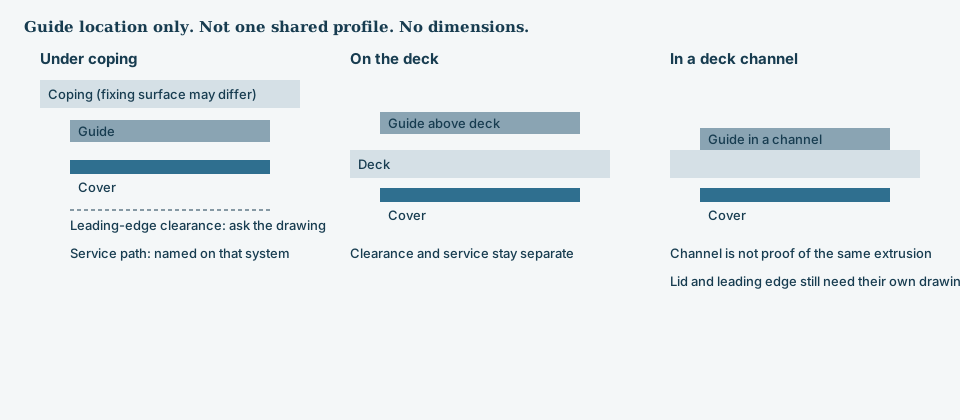
Undertrack places the guide below the coping or in a wall channel the drawing names. Top track fastens on the walking surface. Recessed top track puts a guide in a deck channel. Those are locations, not one shared extrusion. Cover-Pools describes underside tracks and flush deck channels as different interfaces, and Coverstar's gunite photo guide separates screw-on coping track from encapsulated wall track. Read the three-track comparison before anyone treats them as the same profile.
Compare undertrack, top track and recessed deck track by attachment surface, leading-edge clearance and service access before committing to coping and deck work.
What makes a track fail travel
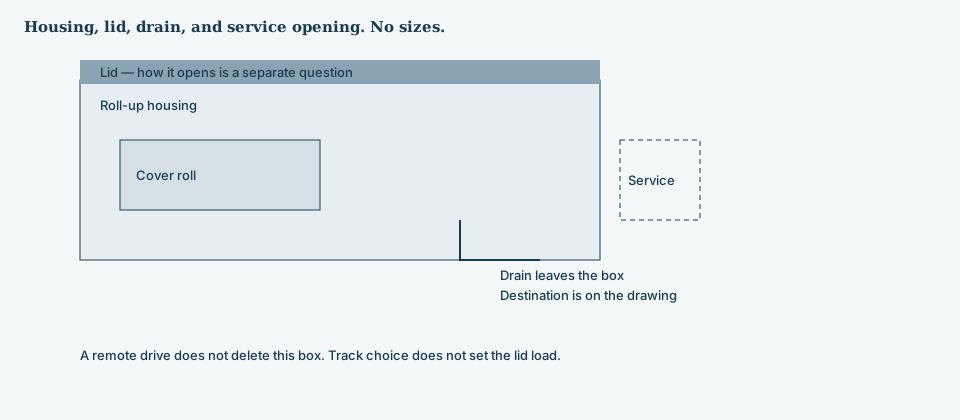
Grit, scale, a bent leading edge, and a cover that has left one guide are the usual binds. Water level that is far from the commissioned mark makes the fabric sag into the guide. Forcing the key then is how slugs and webbing fail.
| You see | Owner check | Installer work |
|---|---|---|
| Leaves in the rail | Rinse from the deck | Do not pry the guide open |
| Fabric off one side | Stop travel | Reseat gliders and inspect webbing |
| Fasteners backing out | Photograph and stop if the rail moves | Re-anchor to the specified substrate |
| Crooked leading edge | Check water and trash | Square the bar and reset limits |
What to read with this page
Use the parent hub for the product family, then stay inside this cluster for the decision you still have open. The related cards below are the three pages that usually settle the next question without sending you back to a generic search.
If travel is already unsafe, leave the guide and open repair. If you are still planning a system, work through the planning checklist and bring the answers to the people who will measure and install it.
常见问题
- Is undertrack always better?
- It is cleaner visually. It is harder to retrofit and harder to service if the coping was not designed for access.
- Can I mix top track on one side and undertrack on the other?
- Do not invent a mix on site. A hybrid is allowed only when the selected manufacturer publishes that combination for that track series. Otherwise keep both sides on the guides that drawing specifies. The three-track comparison is the longer read.
- Why does a recessed track still look like top track?
- A recess is a channel and a finished level, not proof that the extrusion matches a surface top track. Ask which series the proposal uses, and whether the lid and the leading edge stay above the deck. The comparison page keeps those as separate drawings.
上级栏目: Installation